
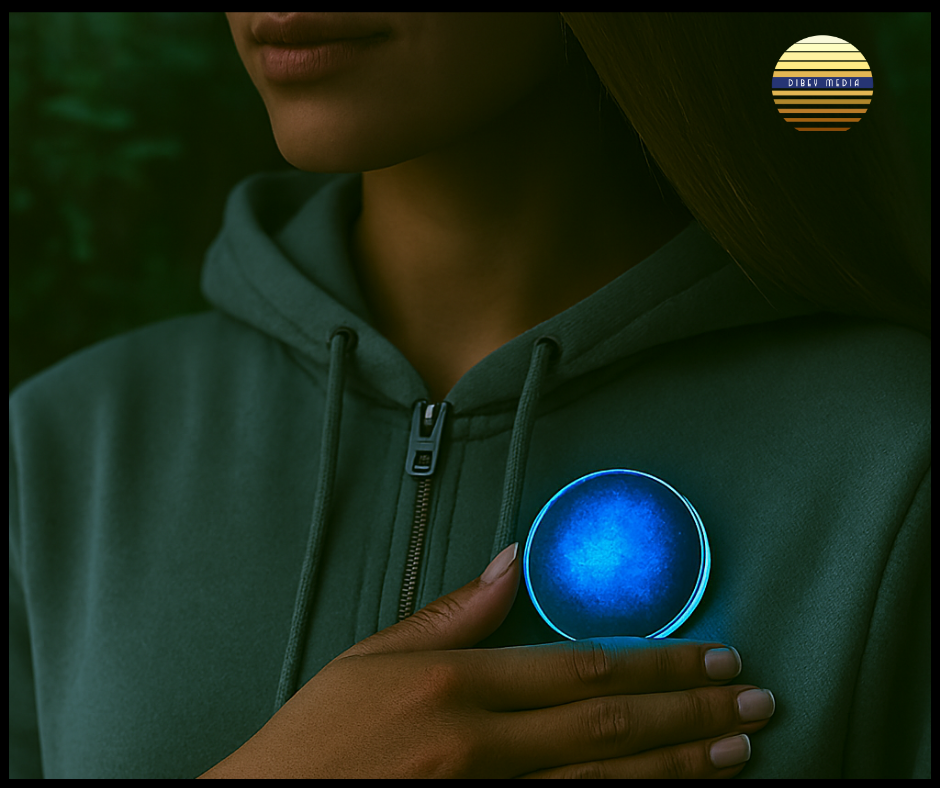
Wearable Technology for Emotional Healing is not just a thought experiment about future fashion; it is a meditation on what happens to the parts of us that memory refuses to surrender. I have spent the last year thinking about how we metabolize heartbreak, especially the kind you do not walk away from because you stopped caring, but because staying would have required abandoning yourself. That kind of ending leaves a permanent emotional fingerprint. The idea of wearable technology for emotional healing makes more sense when you’ve lived through a version of loss that is not clean, not cinematic, and not followed by the triumphant upward spiral people like to glamorize on social media. Sometimes healing is not closure, sometimes healing is simply remembering yourself more gently.
Why Emotional Memory Lives in the Body
The first time I encountered research confirming that the body holds emotional memory longer than the mind wants to admit, it startled me. Neuropsychology studies from Columbia University describe how scent bypasses rational processing and travels straight to the amygdala, the seat of emotional memory. It explains why a shirt, a song, or an accidental whiff of a familiar cologne can time-travel a person back to a version of themselves they aren’t ready to face. Your nervous system remembers even when you are done speaking about it.
Traditional talk therapy helps, but it does not always reach the layer where the body stores loss, especially the complicated kind where you left someone you loved because loving them meant betraying your own needs. Those breakups do not dissolve on command. They echo.
This is where I began to wonder: if wearable technology can track glucose, cortisol, heart rate, sleep cycles, and trauma responses through biometric sensors, what would it look like if a garment could store emotional data as well? Not as surveillance, but as a witness.
A World Where Clothing Doesn’t Just Warm You, It Knows You
We already treat hoodies like emotional armor. They are the first thing people reach for when the day feels too heavy, when silence becomes a form of self-rescue, when retreat is necessary. In speculative fashion labs, designers are experimenting with fabrics that hold thermal memory, scent molecules, and biosensory feedback. MIT’s Mediated Matter research demonstrated textiles that can change behavior based on physiological emotion markers. Emotional tech is not science fiction anymore, it is quietly approaching the mainstream.
But if a hoodie could keep the timestamp of the moment your heart cracked, would you want it to?
Some people would run from the idea, assuming it would only freeze pain in place. I thought that too at first. But grief does not persist because we remember, grief persists because something in us feels unwitnessed. A garment that holds memory is very different from a garment that traps it. If the memory is held instead of exiled, your nervous system stops re-ringing the alarm.
The Breakup I Still Remember in My Muscles
I did not leave him because I stopped caring. I left him because I finally started caring about myself. That distinction is the invisible bruise people don’t see. It changes you. Self-protective breakups feel like you amputated a future you loved for the sake of a self you almost lost. I remember the exact night my body understood what my mind had been bargaining against. My breathing changed first, then my posture, then the way my chest carried weight I couldn’t name yet.
If I had owned a hoodie capable of “remembering” those physiological imprints, the scent of his perfume lingering in the air, the cadence of the song playing in the kitchen, the grief I swallowed instead of expressed. I think I would have felt less alone moving through it. Not because the hoodie could fix anything, but because something would have acknowledged the fracture honestly instead of forcing me to pretend it did not exist.
What This Wearable Technology Would Actually Track
There is a scientific component behind the poetry. Emotional states produce measurable shifts in:
- micro-sweat levels
- cortisol changes
- breath tempo
- heart rate variability
- limbic “recall” activation in the skin
Future fabrics embedded with bioresponsive threads could realistically store this. Not just data, but context, the emotional climate of a moment. Wearable technology for emotional healing is not about turning sorrow into a graph. It is about integrating memory instead of white-knuckling through suppression.
A speculative memory hoodie could translate physical sensations into something stored gently rather than repressed violently. Pain metabolizes best when it has somewhere to land.
Would Wearing Emotion Be Liberation or Attachment?
Critics would say this sounds like emotional dependence masquerading as innovation. I understand that critique. Some will claim that healing means letting go, that remembering so precisely is indulgent, that grief objects only prolong heartache. But people already cling to sentimental artifacts, old shirts, voicemails, photographs, perfume bottles, because they are notebooks of the body. A garment intentionally designed to hold memory can become a container rather than a wound.
The difference is not in the object, the difference is in the agency. When a person chooses to remember willingly, the memory stops hijacking them involuntarily.
The Material Reality of Emotional Comfort
This is where today’s world overlaps with tomorrow’s concept. People are already using tactile garments to ground their nervous system during emotional overwhelm. Weighted textiles help regulate dysregulation by providing deep pressure therapy. A high-quality weighted hoodie acts as a proxy for co-regulation when the body has no safe witness.
Here is where a tangible parallel belongs, so it does not feel abstract:
The weighted sensory hoodie functions as a bridge between wearable comfort and the emotional memory concept. It is not a data garment, but it reflects the truth that healing often begins with the body long before the story catches up.
The second practical tether to this future is scent. Neuroscience confirms scent memory is the oldest memory system in the brain. It is the one least governed by rational thought. Some days I wonder if a scent diffuser is the modern-day diary. A small, personal way of controlling what the nervous system associates with safety, reclaiming the sensory field heartbreak once occupied. The portable essential oil diffuser echoes that need. Not nostalgia, not erasure, but re-anchoring.
Who Owns Emotional Data?
There is a more complicated layer beneath comfort. If a garment stored emotional metadata, who would own it? You, the device manufacturer, or an AI training system? This is not theoretical, legal scholars are already debating biometric privacy for facial recognition and affective computing. The idea of a hoodie remembering your heartbreak introduces new ethical conversation. If grief is data, then heartbreak becomes a privacy issue, not just a personal one.
Some would fear commercialization of sorrow. Others would argue emotional equity is valid labor and memory itself is a form of experiential capital. These tensions are not flaws, they are evidence the topic belongs to humans before it belongs to market strategy.
Healing Is Not About Forgetting
The real innovation here is not wearable technology, it is permission. Permission to admit that some breakups are survivals. That leaving someone you love is still loss, even if it was an act of self-rescue. The idea of a hoodie that remembers is simply a metaphor for something most people secretly crave, a witness that does not talk you out of your own history.
I think people imagine healing as deletion. It is not. It is integration. What once hurt is not exiled, it is contextualized. The pain stops being the storm and becomes the weathered coastline still present but no longer drowning.
If This Ever Becomes Real
If emotional memory wearables move from the speculative space into the therapeutic mainstream, it will not be because people want novelty. It will be because people are tired of pretending that emotional transitions are linear. Because some losses do not resolve with time, they resolve with recognition. And because those who walk away to protect their peace deserve gentler archives than the nervous system’s raw imprint.
Would You Wear Something That Remembers?
I would. Not because I want to live in the past, but because I do not want the past living inside me unacknowledged. A hoodie like this would not be a monument to heartbreak, it would be a breadcrumb trail back to self-trust. Sometimes closure is not an ending, sometimes closure is a witness.
If a garment could speak softly to the nervous system and say, “Yes, that hurt, and you survived,” maybe healing would feel less like exile and more like integration. So I will leave you with a question. Not a rhetorical one, an honest one:
If you could wear something that held the truth of what you endured, not the version others expected, but the one your body knows, would you choose to remember, or would you choose to un-feel?

Discover more from Dibey Media
Subscribe to get the latest posts sent to your email.